

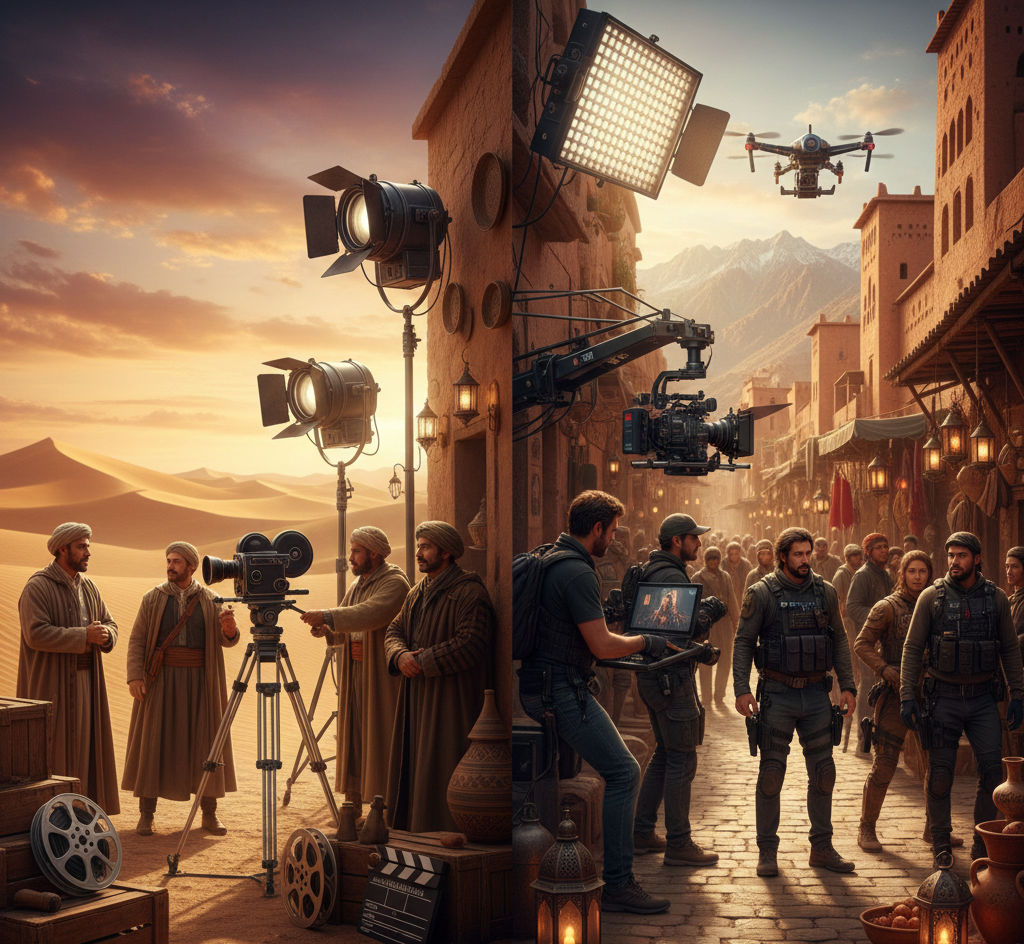
The Evolution of Morocco’s Film Industry: 6 Milestones That Shaped a Cinematic Powerhouse
Discover the evolution of Morocco’s film industry! Explore 6 pivotal milestones that transformed Morocco into a global cinematic hub.
Introduction: From Desert Backdrop to Global Stage
Close your eyes and imagine the golden sands of the Sahara stretching endlessly under the sun, the ancient walls of Aït Benhaddou standing tall against time, and the vibrant streets of Marrakech buzzing with energy. Now, picture a film crew capturing these breathtaking scenes, transforming Morocco’s landscapes into cinematic masterpieces. This isn’t just a snapshot of a movie set—it’s the story of the evolution of Morocco’s film industry, a journey that has turned a North African gem into a global powerhouse of cinema.
For decades, Morocco has been more than just a picturesque filming location. It has evolved into a dynamic hub for filmmakers, offering unparalleled beauty, cost-effective production, and a rich cultural tapestry. But how did Morocco’s film industry grow from a humble beginning to an international sensation? Join us as we explore the 6 pivotal milestones that shaped Morocco’s cinematic journey and discover how this industry continues to inspire, innovate, and captivate audiences worldwide.
The Journey of Morocco’s Film Industry: A Timeline of Transformation
1. The Early Days: A Hidden Gem for Filmmakers (1940s–1960s)
Morocco’s cinematic journey began in the mid-20th century when international filmmakers discovered its exotic landscapes and historic charm. The country’s unique blend of Arab, Berber, and European influences made it an ideal stand-in for the Middle East, North Africa, and even ancient Rome.
- First International Productions: Films like The Man Who Knew Too Much (1956) and Lawrence of Arabia (1962) put Morocco on the map as a go-to destination for epic storytelling.
- Local Cinema: Moroccan filmmakers began exploring their own narratives, laying the foundation for a homegrown film industry.
2. The Golden Era: Hollywood Discovers Morocco (1980s–1990s)
The 1980s and 1990s marked a turning point for Morocco’s film industry, as Hollywood blockbusters and international productions flocked to the country. The establishment of Atlas Studios in Ouarzazate in 1983 solidified Morocco’s reputation as a world-class filming destination.
- Iconic Films: The Jewel of the Nile (1985), The Mummy (1999), and Gladiator (2000) showcased Morocco’s diverse landscapes and historic architecture.
- Infrastructure Growth: The development of state-of-the-art studios and production facilities attracted major international studios.
- Economic Impact: The influx of foreign productions created jobs, boosted local businesses, and positioned Morocco as a key player in global cinema.
3. The Rise of Moroccan Cinema: Telling Local Stories (2000s–2010s)
As Morocco’s film industry matured, local filmmakers began gaining international recognition for their unique storytelling. Moroccan cinema started to carve out its own identity, blending traditional narratives with modern themes.
- Award-Winning Films: Movies like The Unknown Saint (2019) and Adam (2019) received critical acclaim at global film festivals, including Cannes and the Marrakech International Film Festival.
- Government Support: The Moroccan government introduced funding programs and incentives to support local filmmakers, fostering a new wave of creativity.
- Cultural Exchange: Moroccan films began to explore social issues, history, and identity, resonating with audiences both at home and abroad.
4. The TV Boom: Morocco as a Global TV Production Hub (2010s–Present)
Morocco’s film industry expanded beyond cinema to become a major hub for global TV productions. Reality shows, dramas, and adventure series discovered the country’s potential, turning it into a versatile and cost-effective filming location.
- Iconic TV Shows: Game of Thrones, The Amazing Race, and Prison Break filmed key scenes in Morocco, attracting millions of viewers worldwide.
- Reality TV: Shows like Survivor and Expedition Impossible used Morocco’s diverse landscapes to create high-stakes challenges and breathtaking visuals.
- Economic Growth: The TV boom generated thousands of jobs and stimulated local economies, from hospitality to transportation.
5. The Modern Era: Innovation and Global Collaboration (2020s)
Today, Morocco’s film industry is at the forefront of innovation, embracing new technologies, co-productions, and sustainable practices. The country continues to attract international filmmakers while nurturing local talent.
- Cutting-Edge Technology: Morocco is investing in digital effects, virtual production, and post-production facilities, keeping pace with global industry trends.
- Co-Productions: Collaborations with European, American, and African producers are creating films that blend local and global perspectives.
- Sustainability: The industry is adopting eco-friendly practices, from solar-powered studios to waste reduction initiatives.
6. The Future: A Bright Horizon for Morocco’s Film Industry
As Morocco’s film industry continues to evolve, the future looks brighter than ever. With ongoing government support, a growing pool of talent, and an ever-expanding global reputation, Morocco is poised to remain a leader in cinema and TV production.
- Emerging Talent: Young Moroccan filmmakers are gaining recognition, bringing fresh voices and innovative storytelling to the industry.
- Film Festivals: Events like the Marrakech International Film Festival are putting Morocco on the map as a hub for cinematic excellence.
- Global Expansion: Morocco is increasingly becoming a co-production partner for international films, expanding its influence in the global market.
Key Milestones in Morocco’s Film Industry
| Era | Milestone | Impact |
|---|---|---|
| 1940s–1960s | First international films shot in Morocco (Lawrence of Arabia). | Established Morocco as an exotic filming location. |
| 1980s–1990s | Opening of Atlas Studios in Ouarzazate. | Attracted Hollywood blockbusters and boosted local infrastructure. |
| 2000s–2010s | Rise of Moroccan cinema and international acclaim. | Local filmmakers gained global recognition. |
| 2010s–Present | Morocco becomes a global TV production hub. | Reality shows and dramas boosted tourism and job creation. |
| 2020s | Embracing innovation and sustainability. | Morocco adopts cutting-edge technology and eco-friendly practices. |
| Future | Continued growth and global expansion. | Morocco solidifies its role as a leader in cinema and TV production. |
Conclusion: A Legacy of Storytelling and Innovation
The evolution of Morocco’s film industry is a testament to the country’s ability to blend cultural richness, strategic vision, and global collaboration. From its early days as a hidden gem to its current status as a cinematic powerhouse, Morocco has continually reinvented itself, embracing new challenges and opportunities. As the industry looks to the future, one thing is clear: Morocco’s story is far from over.
What’s your favorite film or TV show shot in Morocco? Share your thoughts in the comments below, or start planning your own cinematic adventure in this incredible country!
FAQ: Everything You Need to Know About the Evolution of Morocco’s Film Industry
1. How did Morocco’s film industry begin?
The evolution of Morocco’s film industry started in the 1940s–1960s, when international filmmakers discovered its exotic landscapes and historic charm. Early films like Lawrence of Arabia (1962) put Morocco on the map.
2. What role did Atlas Studios play in Morocco’s film industry?
Atlas Studios, established in 1983, became the largest film studio in the world by land area, attracting Hollywood blockbusters and boosting Morocco’s reputation as a global filming destination.
3. How has Moroccan cinema evolved over the years?
Moroccan cinema has grown from local narratives to internationally acclaimed films, with movies like The Unknown Saint and Adam receiving critical praise at global festivals.
4. Why is Morocco a popular location for TV productions?
Morocco’s diverse landscapes, cost-effective production, and skilled crews make it an ideal location for TV shows like Game of Thrones, The Amazing Race, and Survivor.
5. What does the future hold for Morocco’s film industry?
The future of Morocco’s film industry includes innovation, sustainability, and global collaborations, ensuring its continued growth as a leader in cinema and TV production.
Ready to explore the magic of Morocco’s film industry? Whether you’re a filmmaker, a cinephile, or a traveler, Morocco invites you to experience its rich cinematic heritage. Which era of Morocco’s film evolution fascinates you the most?