

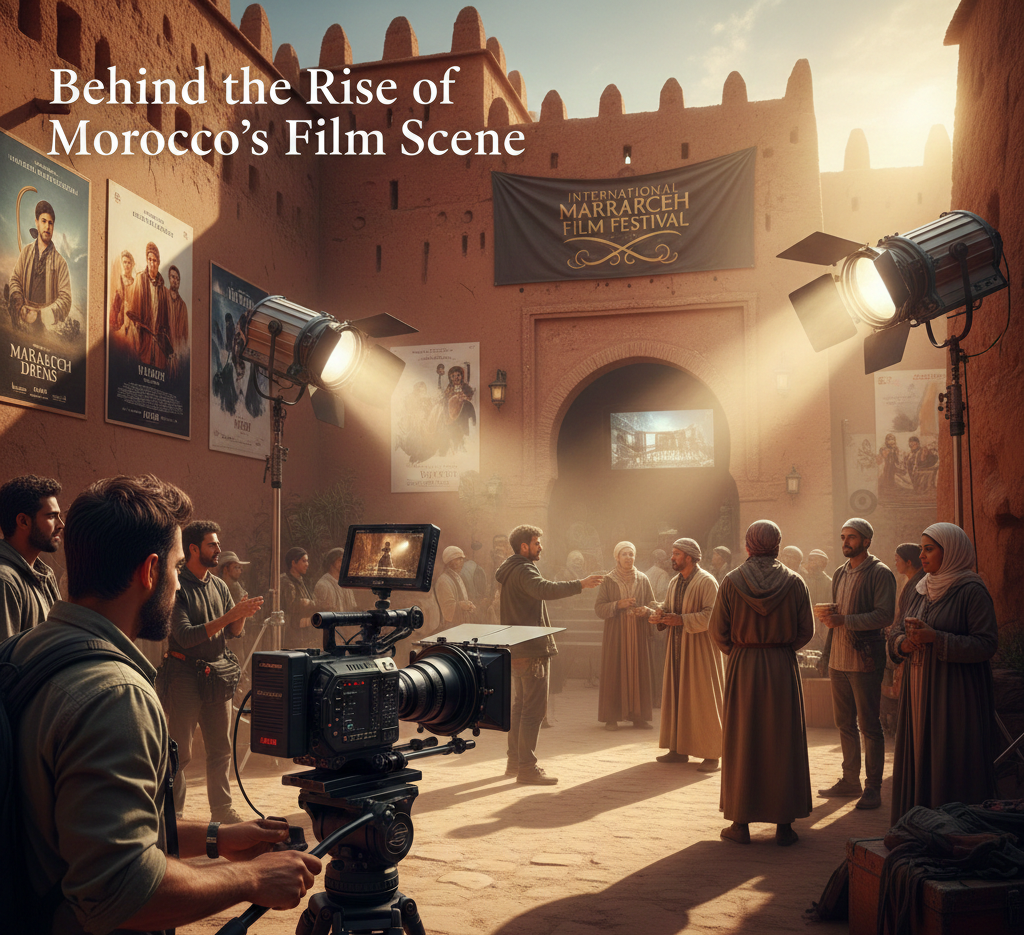
Behind the Rise of Morocco’s Film Scene: 5 Reasons It’s Becoming Hollywood’s New Hotspot
Discover why Morocco’s film scene is booming! From blockbuster locations to tax incentives, explore 5 reasons this North African gem is Hollywood’s next big thing.
Introduction: Lights, Camera, Morocco!
Close your eyes and picture this: golden deserts stretching endlessly under a blazing sun, ancient medinas buzzing with life, and coastal towns where the Atlantic meets rugged cliffs. Now, imagine these breathtaking landscapes as the backdrop for some of the world’s most iconic films. Welcome to Morocco’s film scene—a rising star in global cinema.
Over the past decade, Morocco has transformed from a hidden gem into a powerhouse for filmmakers, attracting everyone from indie directors to Hollywood giants. But what’s fueling this meteoric rise? Why are producers and directors flocking to this North African paradise? Let’s dive into the —and why it’s here to stay.
1. A Diverse Landscape That Doubles for Anywhere in the World
| Location | Famous For | Featured In |
|---|---|---|
| Aït Benhaddou | Ancient ksars & desert fortresses | Gladiator, Game of Thrones |
| Ouarzazate | “The Door of the Desert” | Lawrence of Arabia, The Mummy |
| Essaouira | Coastal charm & historic ports | Othello, Game of Thrones |
| Atlas Studios | Largest film studio in the world | Kingdom of Heaven, The Hills Have Eyes |
Morocco’s geographical diversity is unmatched. Need a saharan desert? Head to Merzouga. A medieval city? Marrakech’s labyrinthine streets await. Coastal villages? Essaouira’s windswept beaches are perfect. This versatility allows filmmakers to shoot multiple settings in one country, saving time and budget.
Fun Fact: Aït Benhaddou, a UNESCO World Heritage site, has appeared in over 20 major films, including Gladiator and The Jewel of the Nile.
2. World-Class Film Studios & Infrastructure
Morocco isn’t just about natural beauty—it’s also home to state-of-the-art film studios. Atlas Studios in Ouarzazate is the , offering everything from ancient Egyptian sets to futuristic sci-fi landscapes.
Why does this matter?
- Pre-built sets reduce construction costs.
- Experienced local crews know the terrain and logistics.
- Post-production facilities are increasingly available.
With Morocco’s film infrastructure rapidly improving, it’s no wonder that productions like The Crown and Prison Break chose to film here.
3. Generous Tax Incentives & Government Support
Morocco’s government has actively courted international productions by offering: ✅ 20% cash rebate on qualifying production expenses. ✅ No VAT on film-related services. ✅ Streamlined permitting for filming in public spaces.
These incentives make Morocco one of the most cost-effective filming destinations outside of Europe and North America. For example, The Night Manager (2016) saved millions by filming in Morocco instead of Egypt or Jordan.
Industry Insight: The provides financial support and logistical assistance to foreign productions, further sweetening the deal.
4. A Thriving Local Film Industry & Talent Pool
Morocco isn’t just a backdrop—it’s a hub for local storytelling. The country produces , with directors like Nabil Ayouch (Much Loved, Razzia) gaining international acclaim.
Why this matters for foreign productions:
- Access to skilled local crews (cinematographers, set designers, etc.).
- Cultural authenticity in storytelling.
- Collaborations with Moroccan actors (e.g., Lubna Azabal in Incendies).
The , founded in 2000, has also put Morocco on the global cinema map, attracting A-list stars and industry heavyweights.
5. Strategic Location & Ease of Access
Morocco’s proximity to Europe (just a 3-hour flight from Paris or Madrid) makes it an ideal filming location for international productions. Additionally:
- Well-connected airports (Casablanca, Marrakech, Agadir).
- Visa-friendly policies for film crews.
- Affordable accommodation compared to Western alternatives.
This logistical advantage means less downtime and more shooting—something every producer dreams of.
The Future of Morocco’s Film Scene: What’s Next?
With new studios in development (like the $200 million film city near Rabat) and increased government investment, Morocco is poised to become Africa’s answer to Hollywood.
Upcoming projects to watch:
- Dune: Part Two (2024) – Filmed in the Moroccan desert.
- The Old Guard 2 (2024) – Action sequences shot in Marrakech.
Conclusion: Why Morocco Is the Next Big Thing in Film
From its breathtaking landscapes to world-class studios, generous incentives, and burgeoning local talent, Morocco is rewriting the rules of global filmmaking. Whether you’re a filmmaker looking for your next location or a cinephile eager to explore the magic behind the scenes, Morocco’s film scene is one to watch.
Ready to dive deeper? 🔹 Share this article with a filmmaker friend! 🔹 Comment below: What’s your favorite movie filmed in Morocco? 🔹 Explore more: Check out the Moroccan Cinema Centre’s official site for filming opportunities.
FAQ: Everything You Need to Know About Morocco’s Film Scene
1. Why do so many Hollywood movies film in Morocco?
Morocco offers diverse landscapes, cost-effective production, and government incentives like tax rebates. Its proximity to Europe and experienced crews make it a top choice for international productions.
2. What are the most famous movies filmed in Morocco?
Some iconic films shot in Morocco include:
- Gladiator (2000)
- Game of Thrones (Seasons 3 & 5)
- Lawrence of Arabia (1962)
- The Mummy (1999)
- Sex and the City 2 (2010)
3. How can I film my project in Morocco?
Start by contacting the Moroccan Cinema Centre (CCM) for permits and incentives. Many productions also work with local fixers to navigate logistics.
4. Are there film schools in Morocco?
Yes! The in Rabat and ESAV Marrakech are leading institutions for aspiring filmmakers.
5. What’s the best time of year to film in Morocco?
Spring (March–May) and Fall (September–November) offer the best weather, avoiding extreme heat or rain. However, desert scenes are often shot in winter for cooler temperatures.
Final Thought: Morocco’s film scene is more than just a trend—it’s a . As the world takes notice, one thing is clear: the best is yet to come.