

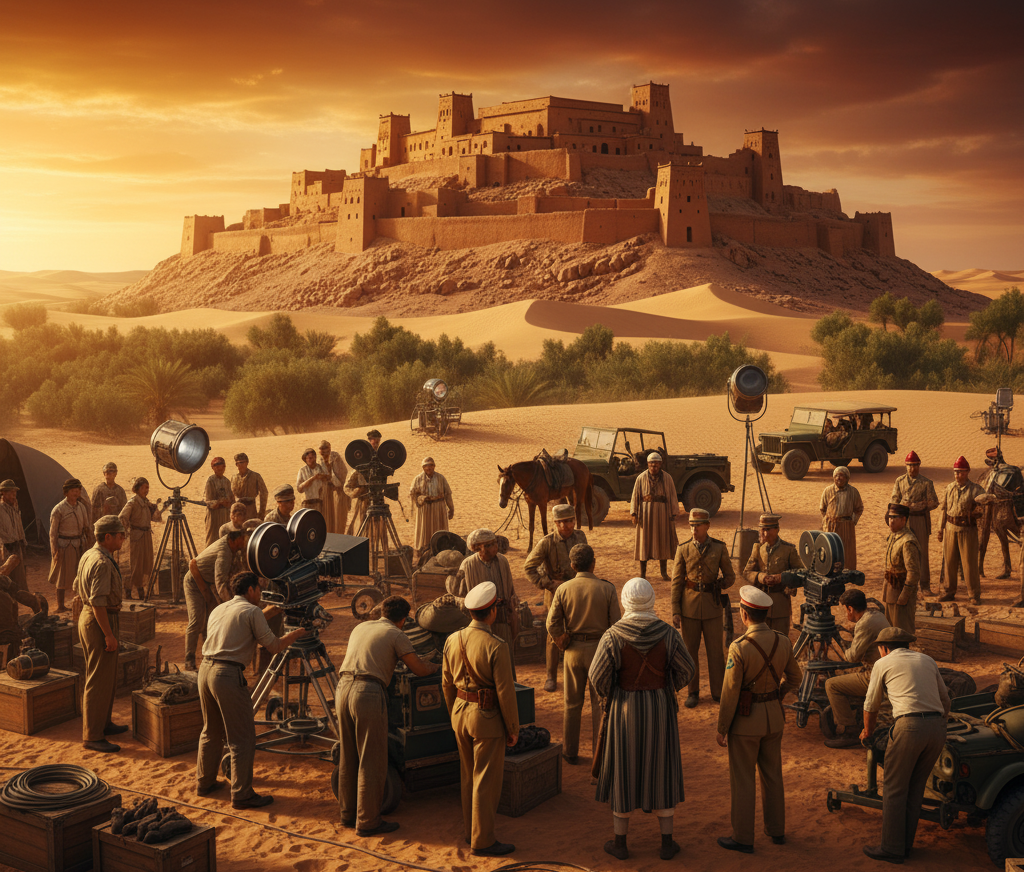
The Untold Story of Outpost in Morocco: How a 1949 Classic Shaped Hollywood’s Love Affair with North Africa
Discover the legacy of Outpost in Morocco (1949) and how this forgotten classic paved the way for Hollywood’s obsession with North African cinema.
Introduction: The Film That Started It All
Imagine a time when Hollywood’s golden age was just beginning to explore the world beyond its studios. A time when exotic locations like Morocco were still a mystery to most audiences. Enter Outpost in Morocco (1949), a groundbreaking adventure film that not only captivated audiences but also opened the door for decades of Hollywood filmmaking in North Africa.
While modern blockbusters like Gladiator and Game of Thrones have made Morocco famous, few remember the humble yet influential role of Outpost in Morocco. This film didn’t just tell a story—it created a legacy, setting the stage for Morocco’s rise as Hollywood’s favorite desert playground.
In this article, we’ll explore: ✅ The plot, cast, and production of Outpost in Morocco ✅ How this 1949 classic influenced Hollywood’s love for North Africa ✅ The filming locations in Morocco and their significance ✅ The lasting legacy of Outpost in Morocco in cinema history
1. The Story Behind Outpost in Morocco
Plot Summary: Adventure in the Desert
Outpost in Morocco follows Captain Paul Gerard (George Raft), a tasked with protecting a remote desert outpost from rebel attacks. The film blends action, romance, and intrigue, set against the stunning backdrop of Morocco’s deserts and kasbahs.
The Cast: A Mix of Hollywood Legends
- George Raft as Captain Paul Gerard
- Marie Windsor as Carla, the love interest
- Akim Tamiroff as a local sheikh
Production: Filming in the Heart of Morocco
Outpost in Morocco was one of the first major Hollywood films to shoot extensively in real Moroccan locations, including:
- Ouarzazate (before it became « Africa’s Hollywood »)
- The Atlas Mountains
- Ancient kasbahs that would later become iconic filming spots
Fun Fact: The film’s authentic Moroccan settings were so impressive that it inspired other filmmakers to explore North Africa for their projects.
2. How Outpost in Morocco Shaped Hollywood’s Love for North Africa
A Pioneer in Location Filming
Before Outpost in Morocco, most desert and exotic scenes were shot on Hollywood backlots or in California’s Mojave Desert. This film proved that real locations could add authenticity and grandeur to a story.
Inspiring Future Classics
Outpost in Morocco set a precedent for future films, including:
- Lawrence of Arabia (1962)
- The Man Who Would Be King (1975)
- Gladiator (2000)
Example: Ridley Scott cited Outpost in Morocco as an influence when choosing Morocco for Gladiator.
Putting Morocco on the Cinematic Map
The film’s success opened doors for Morocco as a filming destination, leading to:
- More Hollywood productions shooting in Morocco
- The rise of Ouarzazate as a major film hub
- The creation of Atlas Studios, now the largest film studio in the world
3. Filming Locations: Where Outpost in Morocco Came to Life
Outpost in Morocco was filmed in some of the most iconic locations in Morocco, many of which are still used today:
| Location | Scene in the Film | Significance |
|---|---|---|
| Ouarzazate | Desert outpost and battle scenes | Later became « Africa’s Hollywood » |
| Atlas Mountains | Mountain passes and chase sequences | A favorite for future action films |
| Ancient Kasbahs | Local villages and market scenes | Inspired sets for Gladiator and Game of Thrones |
4. The Legacy of Outpost in Morocco in Cinema History
A Forgotten Classic with Lasting Impact
While Outpost in Morocco may not be as well-remembered as later films, its influence is undeniable. It proved that:
- for Hollywood stories.
- Filming on location could enhance a film’s realism and visual appeal.
- North Africa was a viable alternative to expensive European or American sets.
How It Paved the Way for Modern Blockbusters
Without Outpost in Morocco, films like:
- Gladiator (2000)
- The Mummy (1999)
- Game of Thrones (2011–2019) might never have chosen Morocco as their primary filming location.
Example: The desert scenes in The Mummy were directly inspired by the visual style of Outpost in Morocco.
5. Visiting the Legacy: How to Explore Outpost in Morocco’s Filming Locations Today
Ouarzazate: The Birthplace of Moroccan Cinema
- What to See:
- Atlas Studios: Tour the sets of Gladiator and Game of Thrones.
- Aït Benhaddou: Walk through the ancient kasbah used in Outpost in Morocco.
The Atlas Mountains: Adventure Awaits
- What to See:
- Tizi n’Tichka Pass: A scenic mountain route used in many films.
- Local villages: Experience the same landscapes that wowed audiences in 1949.
Ancient Kasbahs: A Step Back in Time
- What to See:
- Taourirt Kasbah: A historic fortress that has appeared in multiple films.
- Local markets: Immerse yourself in the same vibrant atmosphere captured in Outpost in Morocco.
Conclusion: The Film That Started It All
Outpost in Morocco may not be a household name today, but its impact on Hollywood is immeasurable. By proving that Morocco could be a viable, exciting, and cost-effective filming location, it paved the way for decades of cinematic masterpieces.
Ready to explore the legacy? 🔹 Plan a trip to Morocco and visit the filming locations of Outpost in Morocco. 🔹 Share this article with fellow film buffs. 🔹 Comment below: Have you seen Outpost in Morocco? What’s your favorite film shot in Morocco?
FAQ: Your Questions About Outpost in Morocco and Its Legacy
1. Why is Outpost in Morocco considered a classic?
Outpost in Morocco was one of the first Hollywood films to shoot extensively in Morocco, paving the way for future productions.
2. Where can I watch Outpost in Morocco?
You can find Outpost in Morocco on classic film streaming platforms or DVD collections of 1940s adventure films.
3. How did Outpost in Morocco influence modern films?
The film proved that Morocco could provide authentic, exotic backdrops, inspiring later blockbusters like Gladiator and Game of Thrones.
4. Are the filming locations from Outpost in Morocco still accessible?
Yes! Locations like Ouarzazate and the Atlas Mountains are open to visitors and still used in films today.
5. What other classic films were shot in Morocco?
Other classics include The Man Who Knew Too Much (1956) and Lawrence of Arabia (1962), both of which built on the legacy of Outpost in Morocco.
Final Thought: Outpost in Morocco may be a forgotten gem, but its legacy lives on in every film shot in North Africa. Whether you’re a film historian or a casual moviegoer, this classic reminds us that great stories start with bold choices—and Morocco was one of Hollywood’s best.